What AI Taught Me About Better Customer Service
How many times have you downloaded a new app because you thought it would finally help you get organised?
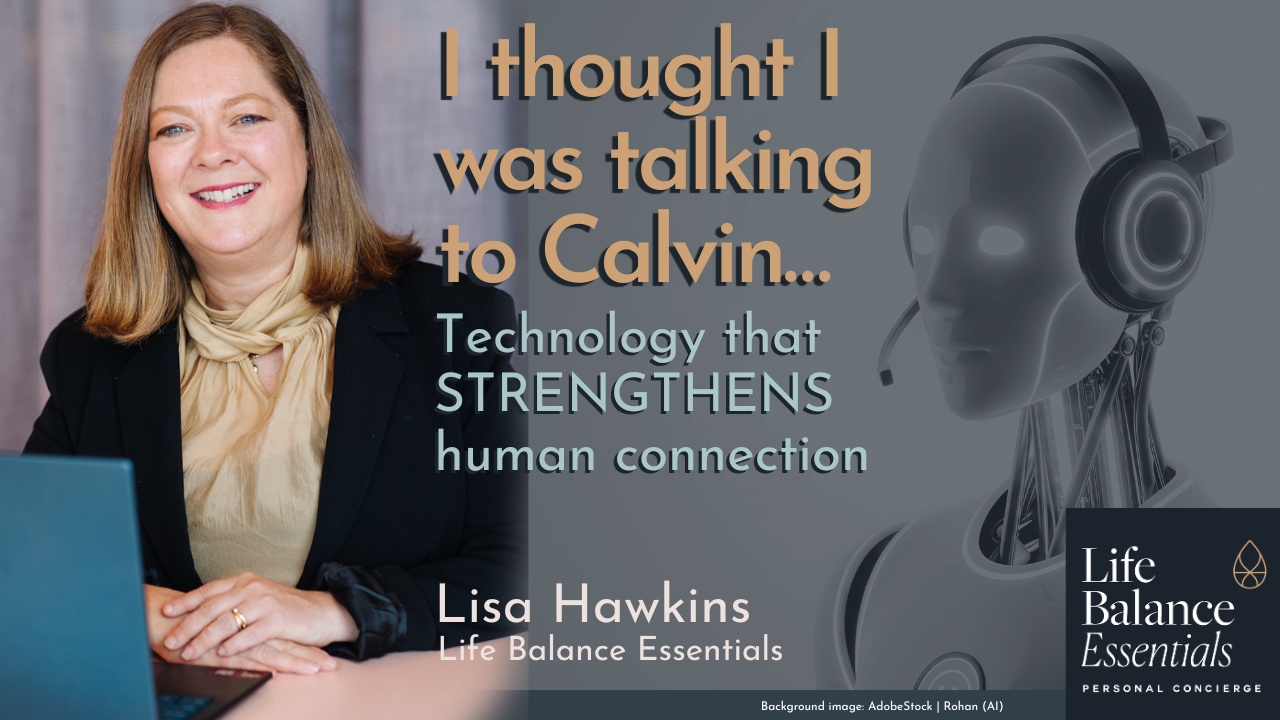
I thought I was talking to Calvin…
The other day I needed to contact Cal.com with a question.
Like most of us, I expected one of two things to happen – either I’d receive a generic automated response telling me someone would get back to me in a few business days, or I’d end up chatting with a bot that repeatedly misunderstood what I was asking.
Instead, I received a reply from “Calvin”.
The response answered my question immediately. It was friendly, conversational, and easy to understand. For a brief moment, I genuinely wondered whether Calvin was a real, human member of their support team.
Then it clicked.
I wasn’t talking to a person at all.
I was talking to AI.
What struck me wasn’t the technology itself. AI is becoming part of everyday business, and many organisations are experimenting with it in different ways.
What impressed me was how human the experience felt.
The response wasn’t trying to convince me I was speaking to a real person. It simply communicated naturally, solved my problem quickly, and left me feeling like the company cared about helping me.
That got me thinking about all the automated messages we receive every day.
“Your enquiry has been received.”
“Do not reply to this email.”
“We’ll respond within 3–5 business days.”
There’s nothing technically wrong with those messages. They do the job.
But do they make anyone feel valued?
Do they reassure your customers?
Do they reflect your business personality?
Or are they just another piece of digital wallpaper that people skim over before moving on?
The little things matter
I’ve spent years helping people create systems that make life and work easier.
Whether it’s organising emails, setting up reminders, simplifying paperwork, or creating processes that reduce overwhelm, I’ve learnt that the smallest details often make the biggest difference.
An automated email is one of those details.
It might only take someone ten seconds to read, but it’s still part of their experience with your business.
If that message can answer a question before they ask it, reduce uncertainty, or simply make them smile, you’ve already improved their day.
Automation doesn’t have to feel robotic
I think one of the biggest misconceptions about automation is that it removes the human touch.
In reality, good automation should do the opposite.
It should free us from repetitive tasks so we have more time for meaningful conversations.
It should handle the predictable questions so we can focus on the complex ones.
It should create consistency without making people feel like they’re just another number.
The businesses that will stand out aren’t necessarily the ones using the most AI.
They’ll be the ones using it thoughtfully.
Then I said thank you…
After Calvin answered my question, I replied with a simple: “Thank you.”
A short time later, another email arrived.
It thanked me for my message and said it was glad it had been able to help.
I’ll admit I laughed.
Not because it was pretending to be human, but because the interaction felt so natural that replying “thank you” seemed like the right thing to do.
That’s good design.
And good customer experience.
It’s exactly what automation should be doing.
It’s not just for big businesses
You don’t need sophisticated AI to improve the experience you create.
Take a look at the templates and automations you already have.
- Your out-of-office reply.
- Appointment confirmations.
- Welcome emails.
- Frequently asked question responses.
- Follow-up emails after a meeting.
- Payment confirmations.
- Even the message someone receives when they book a time with you.
Do they sound like you?
Do they answer the questions people are likely to have?
Do they reduce uncertainty?
Do they leave someone feeling looked after?
If not, they might be worth revisiting.
Small systems. Big impact.
I often say that good systems aren’t about making life more complicated.
They’re about removing friction.
Sometimes that’s a colour-coded filing system.
Sometimes it’s a well-organised inbox.
Sometimes it’s a simple checklist.
And sometimes it’s an automated email that makes someone feel like they’re talking to a real person—even when they’re not.
That tiny interaction with “Calvin” reminded me that technology doesn’t have to replace human connection.
When it’s designed well, it can actually strengthen it.
So now I’m curious…
What automated responses, templates or workflows do you have set up? Have you reviewed them recently, or are they still saying exactly what they did five years ago?